The Transitional Outfit Formula That Works Every September Morning
Quick Answer: The formula is: a fitted base, a mid layer you can remove, a bottom that covers the ankle, and closed shoes. Adjust the weight of each element rather than the structure, and the same four-piece formula covers 12C to 26C. The most common error is a single heavy layer instead of two adjustable ones.
September dressing is difficult for one structural reason: the day has two temperatures and most outfits have one. A formula that adjusts is more useful than a wardrobe full of pieces that only work at one end.
Why does September need a formula at all?
Because the decision is genuinely harder in September than in any other month, and decision fatigue at 7.30am is a real cost.
The temperature range is at its annual widest. Early autumn commonly produces a 10-12 degree swing between morning and mid-afternoon. In July the low is warm; in December the high is cold. September is the only month where both ends are unwearable in the same outfit.
Both wardrobes are available. Summer clothes have not been packed away and autumn clothes have come out, which means twice as many options and no clear signal about which applies.
Context also swings. A month where you are outdoors for a warm afternoon and indoors in a suddenly heated building on the same day requires the outfit to handle both.
A formula removes the decision. You are not choosing an outfit; you are choosing the weight of four known slots. That is a considerably easier decision and it is the reason people who dress well in September usually look like they are wearing variations of the same thing.
The four slots:
- A fitted base layer
- A removable mid layer
- A bottom that covers the ankle
- Closed shoes
Everything below is about how to adjust each one.
Slot 1 and 2: the base and the mid layer
The base layer does the warm-afternoon job. It has to be something you are content wearing alone in a 24C afternoon or an overheated office.
What works: a fitted long-sleeve, a fine-knit top, a good t-shirt, or a bodysuit. What does not: anything you would only wear under something else. If the base is a thin vest, the outfit only has one usable state.
Fit matters here more than anywhere. A fitted base under a loose mid layer is what makes layering read as intentional rather than bulky. Two loose layers produce volume without shape.
The mid layer does the cold-morning job, and it is the piece you adjust most.
In order of weight:
- Fine knit or cardigan - for a 20C+ afternoon with a cool start
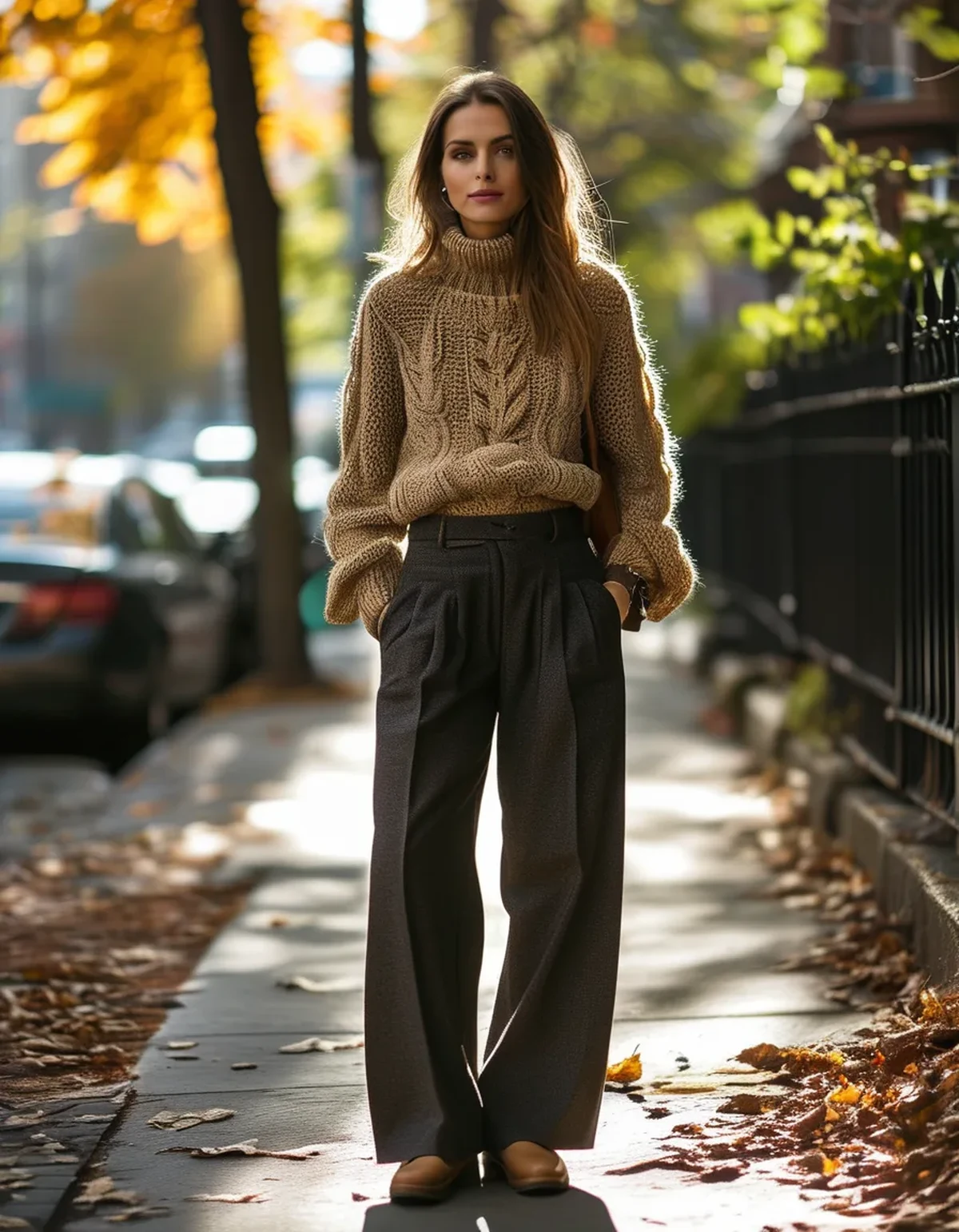
- Medium knit or overshirt - the September default
- Chunky knit or shirt-jacket - for the first genuinely cold mornings
The feature that matters most in the mid layer: sleeves you can push up. It is the finest-grained temperature adjustment available and it costs nothing. Tight cuffs that will not stay pushed up make a knit considerably less useful.
Why two layers rather than one warm one: two layers give three states - both on, mid layer off, mid layer with sleeves pushed. One heavy layer gives two, and neither of them is right at 11am.
Slot 3 and 4: the bottom and the shoes
The bottom needs to cover the ankle, and this is the change that most distinguishes a September outfit from an August one.
Why the ankle specifically: it is the point where cold enters an otherwise adequate outfit, and it is why cropped trousers with bare feet suddenly feel wrong in September even when the temperature has not changed much.
What works: full-length trousers, straight or wide-leg jeans, a midi skirt with something on the legs, or full-length leggings under something.
Fabric weight is where you adjust: a lighter trouser for a warm week, a heavier ponte or denim for a cold one. The shape stays constant.
What to move away from: linen, shorts, and cropped lengths. All three read summer regardless of what is above them.
The shoes close the outfit, and they do more seasonal signalling than anything else in it.
The September range: loafers, trainers, ankle boots, and flats. All closed.
Why closed matters: partly warmth, mostly that an open shoe keeps the entire outfit in a summer register. The same knit-and-trousers combination reads completely differently with a sandal than with a loafer.
The detail that reads current: a visible sock with a loafer or a flat. It is a deliberate choice rather than a compromise, and it solves the ankle problem without needing a boot.
The outer layer, when needed: a fifth optional slot. Denim jacket, blazer, trench, or shirt-jacket, depending on the morning. It comes off first and lives on the back of a chair.
What Nobody Tells You About Transitional Dressing
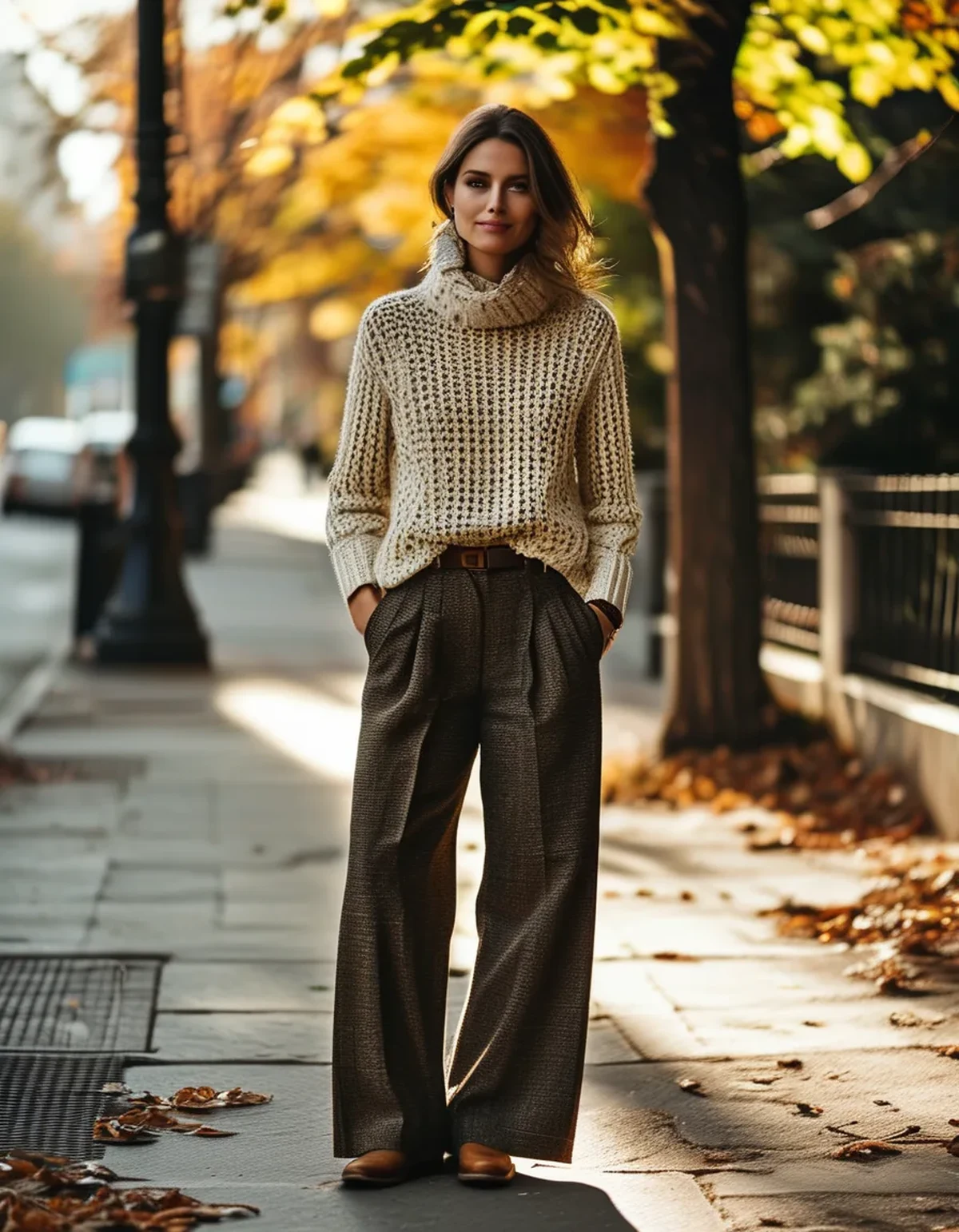
Colour does more seasonal work than shape. The same four-slot outfit in cream and pale blue reads summer; in chocolate and olive it reads autumn. If your clothes feel out of season and you cannot say why, it is usually palette rather than silhouette.
Fabric texture communicates season faster than weight. A ribbed knit reads autumnal even in a light weight. A smooth jersey reads summer even in a heavy one. Texture is the fastest signal available.
The overheated indoor problem is underrated. Buildings turn heating on before the weather requires it, and an outfit planned for a cold morning becomes unbearable in a 24C office. The base layer needs to be genuinely wearable alone, and most people’s is not.
Everyone else is also getting it wrong. The self-consciousness about being the only person in a knit on a warm afternoon is misplaced - September mornings produce a wide range of judgements at every bus stop.
Bag capacity matters more this month. You will be carrying a removed layer for part of the day. A bag that cannot hold a folded cardigan means you carry it in your hand from noon onward.
Check the wind, not just the temperature. A still 16C and a breezy 16C are different propositions, and wind is the variable that determines whether the mid layer is enough or you need the outer one too.
Three complete versions of the same formula
Version 1 - Warm week, cool start (18-26C). Fitted long-sleeve in cream, fine-knit cardigan in chocolate, straight-leg jeans, loafers with visible socks. The cardigan comes off by 11am and the outfit still works.
Version 2 - The September default (14-22C). Fitted top, medium-weight knit in olive or rust, wide-leg trousers in a heavier fabric, ankle boots. A denim jacket or blazer for the morning if there is wind.
Version 3 - First cold morning (10-18C). Fine-knit base, chunky knit or shirt-jacket over it, dark straight-leg jeans or ponte trousers, ankle boots, and a scarf. The scarf is the piece that makes this version work and it disappears into a bag by midday.
What changes between the three: only the weight of each slot. The structure is identical.
Building it with what you own: most people already have all four slots and wear them in summer-weight combinations. The transitional version usually requires one purchase - a medium-weight knit in an autumn colour - rather than a new wardrobe.
If you buy one thing this month: a medium-weight knit in chocolate, olive, or rust, with sleeves that push up. It works in all three versions and it is the piece doing the most work.
The morning routine this produces: check the temperature and the wind, pick the weight for each slot, get dressed. Under a minute, and it works every day of the month.
FAQ: Transitional Outfit Questions, Answered
What if my office is much warmer than outside?
Plan the base layer for the office and the mid and outer layers for the commute. The base is the piece you will wear for most of the day, so it should be chosen for indoors.
Can I still wear summer dresses?
With tights or trousers underneath, a knit over the top, and boots, yes - it becomes a layer rather than the whole outfit. Bare-legged with just a jacket is the version that reads out of season.
What’s the single most useful transitional piece?
A medium-weight knit with pushable sleeves in an autumn neutral. It works in every version of the formula and it is worn more than anything else in September.
How do I stop layers looking bulky?
Fitted base under loose mid layer. Two loose layers is what creates bulk, and it is the most common layering error.
When do I actually pack summer clothes away?
When you have gone three weeks without reaching for them. Doing it by date usually means packing something away during a warm week and retrieving it two days later.
TL;DR:
- Four slots: fitted base, removable mid layer, ankle-covering bottom, closed shoes. Adjust weight, not structure
- The base must be genuinely wearable alone - overheated offices are the underrated September problem
- Sleeves that push up are the finest temperature adjustment available and cost nothing
- Colour and texture communicate season faster than silhouette does
- Fitted under loose is what stops layering reading as bulk
One purchase covers most of the month: a medium-weight knit in chocolate, olive or rust, with pushable sleeves.
See It in Motion
Seen here: High Waist Drawstring Wide Leg Yoga Pants with Pockets — shop it on bubblelime.com
Keep Reading
This article is for general informational purposes only and is not medical advice. It is not a substitute for professional diagnosis or treatment. Always consult a qualified healthcare provider about your individual situation, especially before making significant changes to your diet or exercise routine.