The Five-Piece Formula That Gets You Dressed in Two Minutes
Quick Answer: Build outfits from five fixed slots - base, bottom, third piece, shoes, and one accessory - and pre-decide the options in each slot for the season. With five bases, four bottoms, and three third pieces that all coordinate, you get sixty combinations and no morning decisions. The constraint is not owning less; it is deciding in advance rather than at 7am.
Most people who feel they have nothing to wear own plenty. What they lack is a structure that turns a wardrobe into outfits.

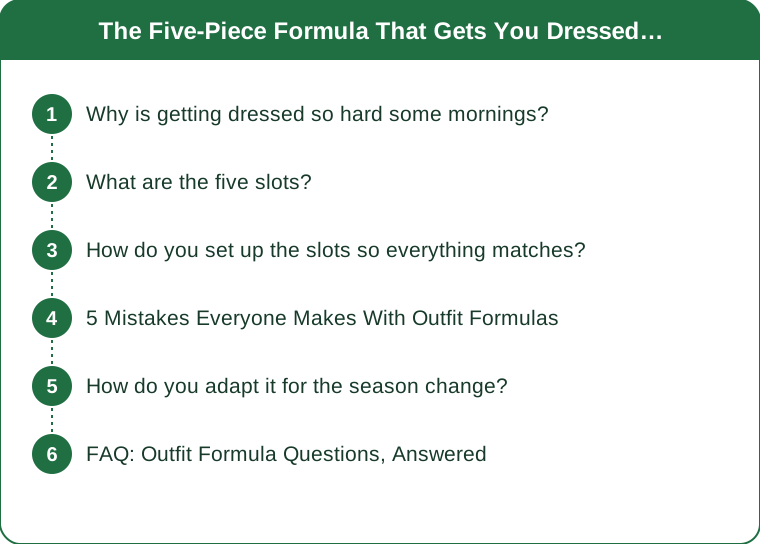
Why is getting dressed so hard some mornings?
Because you are making five interdependent decisions at the worst possible time of day.
The problem is not choice - it is sequential dependency. Picking the top constrains the bottom, which constrains the shoe, which affects whether the jacket works. Each decision changes the others, so you are not making five choices, you are searching a combination space.
Three things make it worse in the morning:
- You are doing it under time pressure, which is exactly when open-ended decisions become stressful
- You are doing it in poor light, before coffee, often before fully waking
- The feedback loop is delayed. You find out whether the outfit worked at 11am, by which point you cannot change it
Why owning less does not automatically fix it. A capsule wardrobe helps by reducing options, and plenty of people with thirty items still stand in front of them for ten minutes. The variable that matters is whether the combinations were decided in advance, not how many items exist.
What a formula does: it converts the search into a lookup. Instead of asking what should I wear, you ask which base, which bottom, which third piece. Three quick choices from pre-approved lists, in a fixed order, with no interdependency because everything in each list works with everything in the others.
What are the five slots?
Base, bottom, third piece, shoes, accessory. Always in that order.
Slot 1 - the base. The layer against you: a fitted top, a shirt, a bodysuit, a fine knit. Simple, in a colour that works with everything in slot 2. This is where you own the most items.
Slot 2 - the bottom. Trousers, jeans, a skirt. Or a dress, which collapses slots 1 and 2 into one and is why dresses feel so much easier.
Slot 3 - the third piece. A blazer, cardigan, shacket, waistcoat, or overshirt. This is the slot most people are missing, and it is the one that makes an outfit look considered rather than assembled. A base and a bottom is clothing; add a third piece and it reads as an outfit. It is also your temperature control.
Slot 4 - shoes. Two or three per season is plenty. Shoes constrain the whole outfit more than anything else, which is why choosing them late works better than choosing them first.
Slot 5 - one accessory. A bag, a scarf, one piece of jewellery, a belt. One is the number - the accessory is a finishing signal rather than a layer of complexity.
Why the order matters: each slot narrows the next, and the order runs from most flexible to most constraining. Choosing the shoes first is what leaves people stuck, because a specific shoe rules out most of the wardrobe.
The maths: five bases, four bottoms, three third pieces gives sixty outfit skeletons. Add two shoe options and it is 120. Nobody needs 120, which is the point - you can miss most of them and never repeat in a month.
How do you set up the slots so everything matches?
One rule: pick two neutrals and one accent, and buy nothing outside them for the season.
The structure:
- Neutral one - the anchor. Black, navy, or chocolate brown. Most of your bottoms and third pieces live here
- Neutral two - the light. Cream, oatmeal, or grey. Most of your bases live here
- Accent - one colour. Rust, olive, burgundy, whatever you actually like. Two or three pieces total, spread across slots
Why two neutrals and not three: with two, everything matches everything, and there is no combination to think about. Add a third and you introduce pairs that do not work, which is exactly the interdependency the formula is designed to remove.
The audit, which takes twenty minutes and is worth doing this weekend:
- Pull everything you actually wear into the five slots
- Count each slot. Most people find slot 3 nearly empty and slot 1 overflowing
- Remove anything that only works with one other item. A piece that has exactly one partner is the reason the wardrobe feels smaller than it is
- Note the gaps
The most common gap by far: third pieces. Most wardrobes have five times more tops than layers, which is why outfits feel incomplete without anyone being able to say why.
The single highest-value purchase for almost anyone doing this: one well-fitting third piece in the anchor neutral. A brown or black blazer, cardigan, or overshirt that goes with every base and every bottom you own. It multiplies the wardrobe you already have rather than adding to it.

5 Mistakes Everyone Makes With Outfit Formulas
1. Starting by throwing things away. The formula is about structure, not volume. Decluttering first means you are making removal decisions before you know what the gaps are, and people consistently remove the wrong things.
2. Choosing shoes first. Shoes constrain everything. Choose them fourth, from two or three seasonal options, and the earlier slots stay open.
3. Too many neutrals. Three or four neutrals reintroduces combinations that do not work. Two is the number that makes everything compatible with everything.
4. Skipping the third piece. The most common structural gap and the one with the biggest visual effect. Without it, even good pieces read as incomplete.
5. Building the formula around clothes you aspire to wear. The fourth mistake is the most common; this one is the most quietly damaging. Build it from what you actually wore in the last month, not from the pieces you keep meaning to use. A formula built on aspiration fails in the first busy week, and then the whole system gets abandoned.
How do you adapt it for the season change?
Change the contents of the slots, not the structure. This is the main advantage of the system.
What changes going into autumn:
- Slot 1: short-sleeve bases move out, long-sleeve and fine knits move in. Same slot, same count
- Slot 2: lighter fabrics out, heavier trousers and denim in. Add tights as an enabler for skirts and dresses
- Slot 3: this slot gets busier. A cardigan and a blazer become a cardigan, a blazer, and an overshirt, and a coat sits above the whole system as a sixth semi-slot
- Slot 4: sandals out, boots and closed shoes in
- Slot 5: a scarf becomes the default accessory, which does temperature work as well
The changeover, done in one sitting: take everything out of the wardrobe, put back only what fits the current season into slots, and box the rest. Twenty minutes twice a year, and it prevents the slow accumulation that makes a full wardrobe unusable.
The transitional-season adjustment. For the next six weeks, temperature swings 20 degrees within a day, which means slot 3 has to work both on and off. The third piece needs to look intentional when you take it off, which is a genuine constraint - a technical jacket fails this and a structured coat passes.
One habit that makes the whole thing work: decide the next day’s outfit the night before, when you are not under time pressure and you know the forecast. Thirty seconds using the formula, and the morning decision disappears entirely.
And a note on the point of this. The goal is not minimalism or optimisation for its own sake. It is to remove one recurring source of friction from a part of the day when you have limited capacity for it, so that getting dressed costs two minutes instead of fifteen and a low-grade sense of failure.
FAQ: Outfit Formula Questions, Answered
How many pieces do I actually need?
Roughly five bases, four bottoms, three third pieces, two or three shoes per season. That is sixty-plus combinations, which is more than anyone uses.
Does this mean wearing the same thing constantly?
The opposite. Most people wear a small rotation because the rest of their wardrobe does not combine. A formula makes more of what you own usable.
What if I like colour?
The accent slot is where it goes, and there is no limit on how bold it is. What the formula restricts is the number of colour families competing in one outfit, not the brightness.
What is the third piece if it is too warm for a jacket?
A waistcoat, an open shirt, a light knit tied over the shoulders, or a scarf doing structural work. The role is visual completion, not warmth.
How do I start?
Audit what you actually wore in the last month, sort it into the five slots, and see which slot is empty. It will almost certainly be the third piece.
TL;DR:
- Five slots - base, bottom, third piece, shoes, accessory - chosen in that order
- Two neutrals and one accent means everything combines with everything
- The third piece is the slot most wardrobes are missing and the one that completes an outfit
- Build the formula from what you actually wore last month, not from what you aspire to wear
- Decide tomorrow’s outfit tonight and the morning decision disappears
You probably do not need fewer clothes. You need the combinations decided at 9pm instead of 7am.
Keep Reading
This article is for general informational purposes only and is not medical advice. It is not a substitute for professional diagnosis or treatment. Always consult a qualified healthcare provider about your individual situation, especially before making significant changes to your diet or exercise routine.