How to Tell If a Knit Will Pill Before You Buy It
Quick Answer: Pilling is caused by short fibres working loose from the yarn surface and tangling. Check four things: fibre length - look for long-staple wool, merino, or combed cotton - yarn twist, knit density, and blend composition. The most reliable in-shop test is to rub the fabric briskly against itself for ten seconds and look for fuzz. High-twist, densely knitted, long-fibre yarns pill least, regardless of price.
Every autumn there’s the same disappointment: a jumper bought in September looks tired by November, covered in small balls of fibre across the arms and sides.
This isn’t random, and it’s only loosely related to what you paid. Four properties determine whether a knit will pill, and all four can be assessed before you buy.

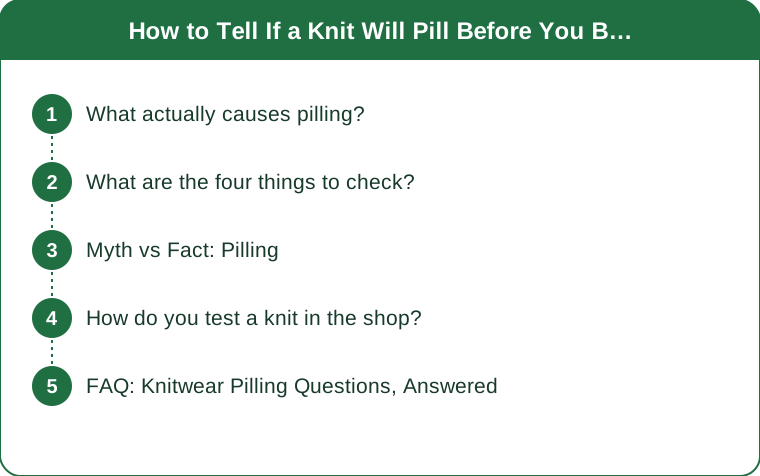
What actually causes pilling?
A three-stage mechanical process, and understanding it tells you exactly what to look for.
Stage 1: fibre ends work loose. Yarn is spun from many short fibres twisted together. Friction pulls the ends of shorter fibres out of the yarn, creating fuzz on the surface.
Stage 2: loose ends tangle. Continued rubbing rolls that fuzz into small balls.
Stage 3: the pill stays attached, or doesn’t. This is the stage where fibre strength decides the outcome. With natural fibres like wool and cotton, the pill is relatively weak and eventually breaks off on its own. With strong synthetics like polyester, nylon, and acrylic, the anchoring fibre is too strong to break - so the pill stays and accumulates.
This explains the counterintuitive observation that a cheap acrylic jumper often looks worse after two months than a lambswool one, even though wool is the softer fibre. It’s not that wool doesn’t pill - it’s that wool pills fall off and synthetic pills don’t.
And it explains why blends are frequently the worst offenders. A wool-polyester blend combines short-ish wool fibres that work loose with strong polyester fibres that hold the resulting pills in place permanently. A small percentage of nylon adds durability; a large percentage of polyester in a soft blend is a pilling machine.
The high-friction zones are always the same: underarms, sides where a bag rubs, the inner forearms, and anywhere a strap or a seatbelt sits.
What are the four things to check?
In order of how much they predict the outcome.
1. Fibre length - the biggest single factor.
Longer fibres have fewer ends per unit of yarn, so there’s less to work loose. What to look for on the label or in the description:
- Merino, and particularly extra-fine merino - long, fine fibres
- Long-staple or combed cotton - combing removes the short fibres specifically
- Cashmere is a special case: the fibres are short and fine, so cashmere does pill - good cashmere pills initially and then settles, because the surface fuzz sheds and the tightly spun core holds. Poor cashmere pills continuously.
- Avoid: unspecified ‘wool’, short-staple cotton, and most cheap acrylic
2. Yarn twist.
Tightly twisted yarn holds its fibres in. The test: look closely at the yarn in the knit. A crisp, defined, ropey-looking yarn is high twist. A soft, fluffy, loosely-defined one is low twist and will shed. The very softest jumpers on the rail are usually the lowest twist, which is the direct trade-off between initial softness and longevity.
3. Knit density.
Hold it up to the light. A dense knit with little light coming through resists pilling; an open loose knit lets fibres migrate and rub. Density also correlates with weight, so a jumper that feels substantial for its size is usually the better bet.
4. Blend composition.
- Good: 100% merino, 100% long-staple cotton, wool with a small nylon content of around 5-15% for durability
- Risky: wool-acrylic blends, anything over about 30% polyester in a soft handle, viscose-heavy blends
- Depends: cotton-cashmere and wool-cashmere blends can be excellent or poor depending on the quality of both components

Myth vs Fact: Pilling
Myth: Expensive knitwear doesn’t pill. Fact: Cashmere is expensive and pills readily, especially early on. Price correlates loosely with fibre quality and not at all reliably. A mid-priced tightly-spun merino will usually outlast a costly loosely-spun cashmere in daily wear.
Myth: Pilling means poor quality. Fact: Some pilling in the first few wears is normal for many natural fibres as surface fibres shed - and it stops. What indicates poor quality is pilling that continues indefinitely and never settles, which points to short fibres in a low-twist yarn.
Myth: Washing causes pilling. Fact: Wearing causes most of it - it’s friction. Washing contributes, particularly in a machine with other garments, which is why washing inside out in a mesh bag helps. But the jumper is pilling on the train, not in the drum.
Myth: Fabric softener helps. Fact: It coats fibres, reduces the yarn’s cohesion, and tends to make pilling worse over time. It also degrades the water-repellency of technical fabrics and reduces towel absorbency. Skip it on knitwear entirely.
Myth: You should pull pills off by hand. Fact: Pulling breaks the anchoring fibres and creates new loose ends, which produces more pills. Cut them with a fabric shaver or a sweater comb - the point is to cut cleanly rather than tear.
How do you test a knit in the shop?
Four checks, about thirty seconds total.
1. The rub test - the most informative. Take a section of the fabric and rub it briskly against itself for about ten seconds - the way friction would occur in wear. Any fabric that produces visible fuzz in ten seconds will pill badly in a fortnight. This is the single best predictor available to a shopper and almost nobody does it.
2. The light test. Hold it up to a window. Dense and even means good; open with visible gaps means fibres have room to migrate.
3. The yarn test. Look at the surface closely. Can you see the individual yarn strands clearly defined, or is the surface a soft undefined haze? Defined means high twist. Haze means low twist and imminent fuzz.
4. The stretch and recovery test. Pull gently across the knit and release. Good yarn springs back; poor yarn stays stretched. This predicts general longevity as well as pilling.
Online, where you can’t touch it:
- Read the full fibre composition, not just the headline material
- Look for the words ‘combed’, ‘long-staple’, ‘extra-fine’, or a micron count - all indicate longer, finer fibres
- Check the weight in grams if listed. A heavier jumper of the same size is denser.
- Search the reviews for ‘pill’. Someone always mentions it, and after a few months of wear the reviews are more informative than any product description.
On care, once you own it: wash inside out, cold, on a wool or delicate cycle, in a mesh bag. No fabric softener. Dry flat. And rest a knit for a day between wears - fibres recover, and a jumper worn three days running pills noticeably faster than the same one worn every other day.
FAQ: Knitwear Pilling Questions, Answered
Does a fabric shaver damage the garment?
A good electric one with a guard doesn’t - it cuts the pills above the fabric surface. Cheap ones without a proper guard can catch and cut the knit itself. A sweater comb or stone is gentler and slower, and better for delicate knits like cashmere.
Why does my jumper only pill under the arms?
Friction concentrates there, plus the arm and side rub together constantly. Bag straps produce the same effect on one shoulder and hip. It’s a wear pattern rather than a fault in that section.
Is acrylic always bad?
For pilling, generally yes - the fibres are strong enough that pills don’t shed. Some high-quality acrylics with high twist perform reasonably. As a broad rule, if a jumper is very soft, very cheap, and mostly acrylic, it will pill within weeks.
Does cashmere get better after the first few washes?
Good cashmere does - it blooms and softens as short surface fibres shed, and the pilling reduces. Poor cashmere, made from shorter fibres and loosely spun, keeps pilling and gradually thins. The first month tells you which one you bought.
Can I stop a jumper pilling entirely?
No, and you can reduce it a lot. Fibre and construction choices at purchase do most of the work; careful washing, resting between wears, and de-pilling with a proper tool handles the rest.
TL;DR:
- Pilling happens when short fibres work loose and tangle - synthetics hold the pills in place, natural fibres shed them
- Four predictors: fibre length, yarn twist, knit density, and blend composition
- Look for merino, extra-fine, long-staple, or combed; be wary of high-polyester soft blends
- The rub test - ten seconds of fabric against itself - is the best in-shop predictor and takes no time
- The very softest jumper on the rail is usually the loosest twist and the fastest to fuzz
- No fabric softener, wash inside out cold in a bag, and rest a knit a day between wears
Pilling isn’t luck and it isn’t price. It’s four properties you can assess in half a minute before you get to the till.
Keep Reading
This article is for general informational purposes only and is not medical advice. It is not a substitute for professional diagnosis or treatment. Always consult a qualified healthcare provider about your individual situation, especially before making significant changes to your diet or exercise routine.