Athleisure That Survives a Wet Commute (and Still Looks Like Clothes)
Quick Answer: Rain defeats athleisure through three failure points - cotton-blend fabrics that hold water, light colours that go transparent when wet, and shoes that soak through and stay wet all day. The fix is a synthetic base that dries fast, a genuinely water-resistant outer layer with a hood, and water-resistant footwear with a spare pair of socks in the bag.
Athleisure is built for a dry commute. Add rain and the same outfit that looked effortless on Monday looks like you have been caught out - because in fabric terms, you have.
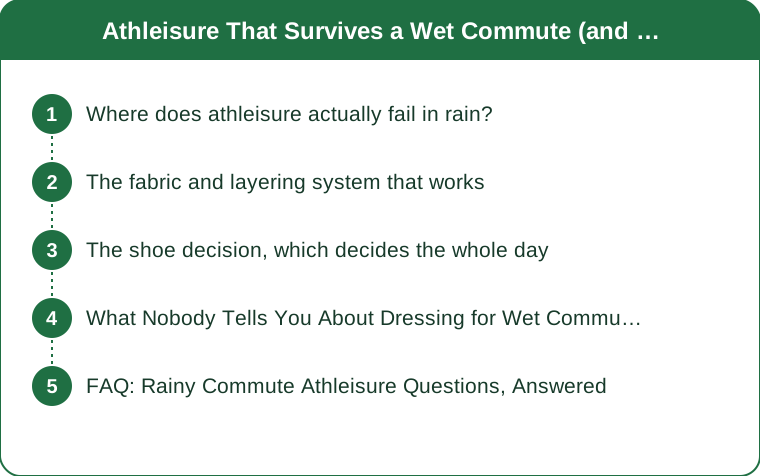
Where does athleisure actually fail in rain?
Three specific failures, and they compound.
Failure 1: Cotton-blend fabrics hold water. Many athleisure pieces marketed as soft and comfortable are cotton or cotton-modal blends. Cotton absorbs up to around 25 times its weight in water, holds it, and dries slowly. A cotton-blend legging caught in ten minutes of rain stays damp and cold for hours, which is a comfort problem and a temperature problem in an air-conditioned office.
Failure 2: Light colours go transparent. Wet fabric becomes translucent, and light greys, pale pinks, and creams are the worst affected. A pale legging in the rain is a genuine wardrobe malfunction, not just an aesthetic one.
Failure 3: Shoes soak and stay soaked. Mesh trainers - the standard athleisure shoe - are designed for breathability, which is the opposite of water resistance. Wet shoes do not dry during a working day, which means damp feet from 9am to 6pm and a shoe that smells by Thursday.
Two secondary problems:
- Fabric transparency at stress points. Wet leggings become sheer at the seat and knees where the fabric is already stretched, and this is where an older pair fails first.
- Wet hems wicking upward. Wide-leg trousers and long hems act as wicks, drawing water up the leg well past where the rain actually reached.
The good news: technical synthetic athleisure is genuinely well suited to rain. The materials that make it good for training - fast-drying, water-shedding, non-absorbent - are exactly what wet weather needs. The failure is in the softer cotton-adjacent pieces, not in the category.
The fabric and layering system that works
Base layer - what touches you:
- Polyester or nylon blends. Fast-drying, non-absorbent, keep their shape when damp.
- Merino wool if you have it - it insulates when wet, which no synthetic does, and it does not smell
- Avoid cotton, cotton blends, and modal in anything that might get wet
- Mid to dark colours. Navy, charcoal, black, deep green - they do not go transparent and they do not show water marks
Mid layer - the temperature control:
- A light fleece or technical knit you can remove indoors
- Full-zip beats over-the-head when you might be damp - it comes off without dragging wet fabric across your face
Outer layer - the one that matters:
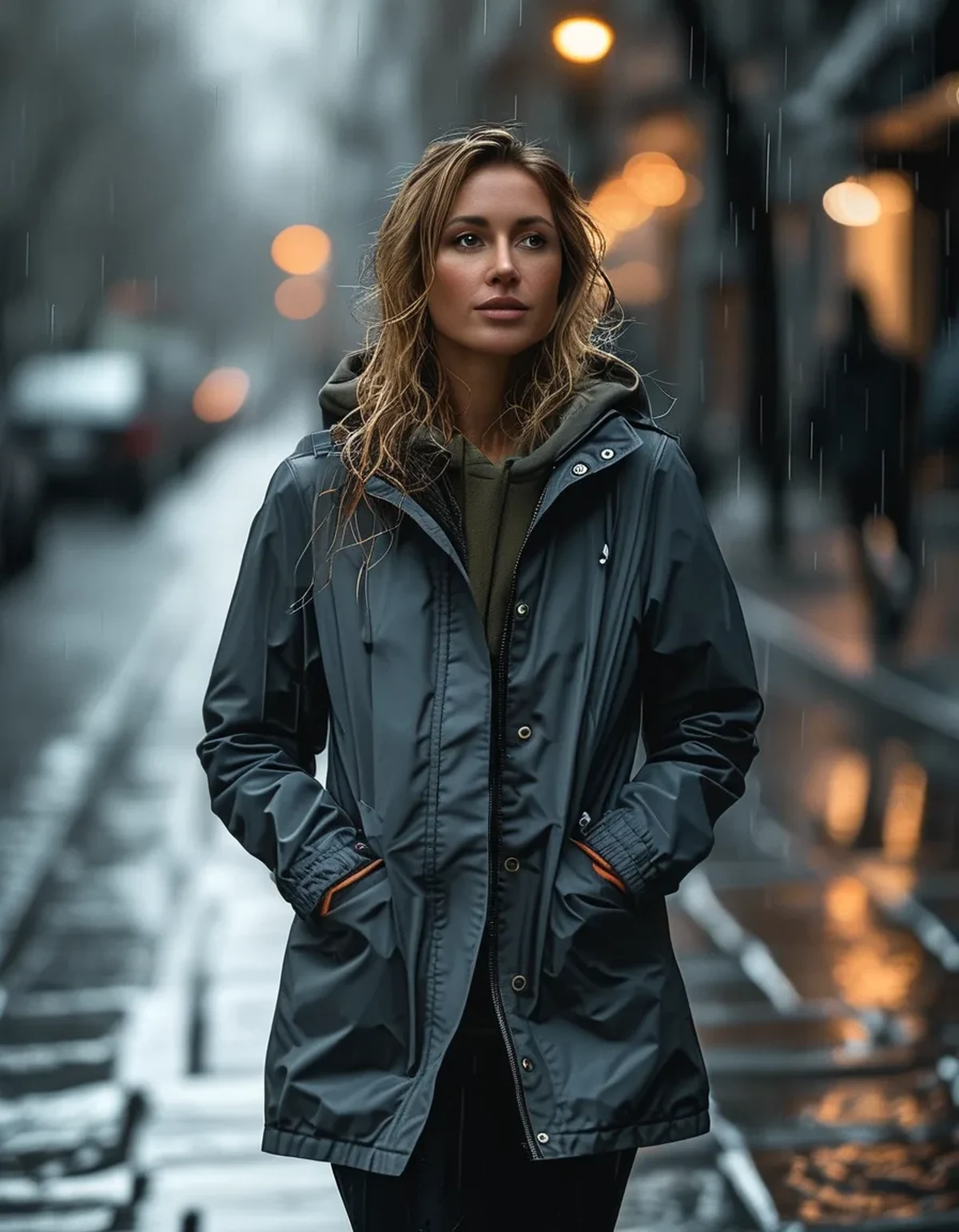
- Water resistant is enough for a commute; waterproof is for weather. A DWR-treated shell handles typical rain and breathes better.
- A hood is worth more than an umbrella on a windy day and leaves both hands free
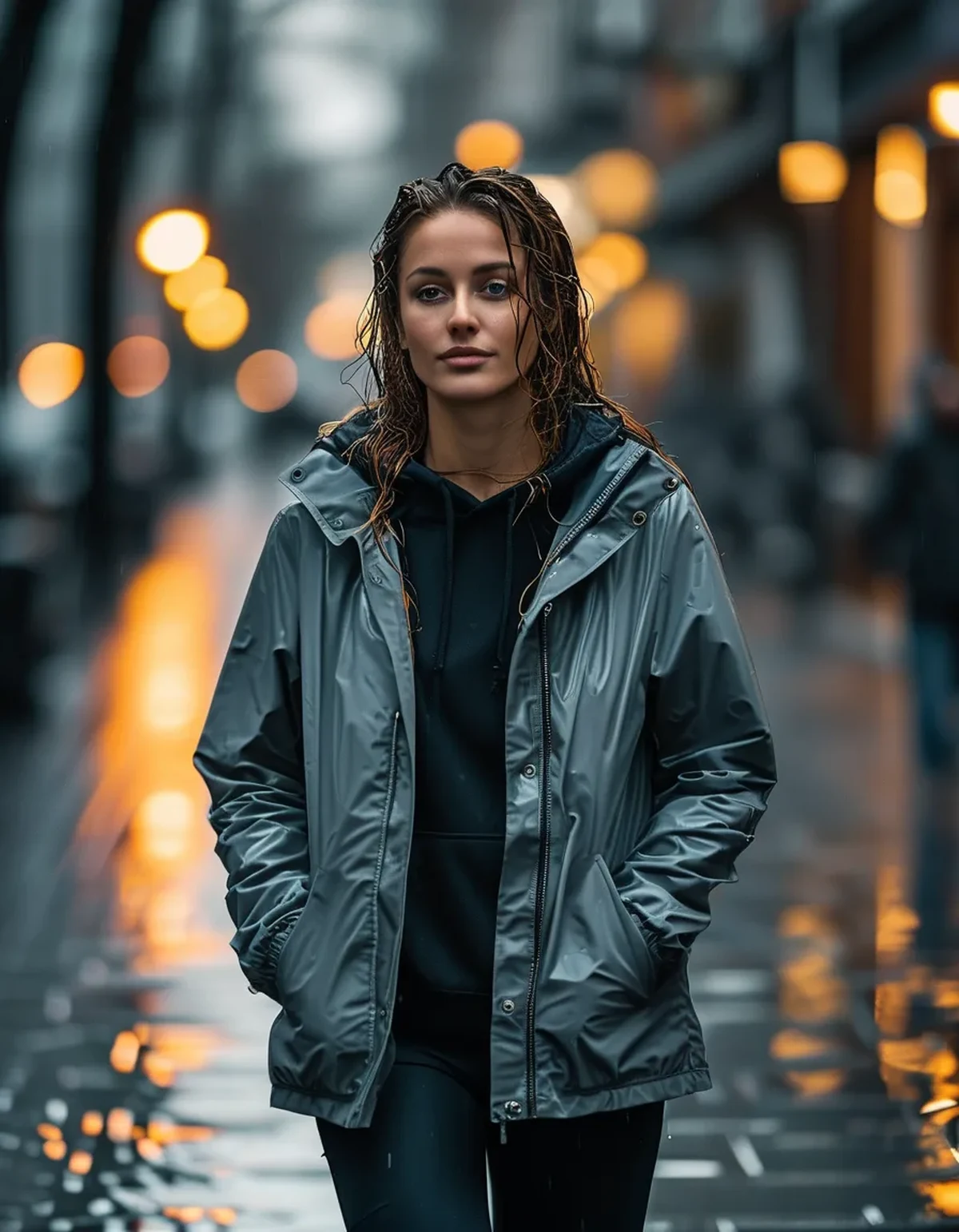
- Length matters - hip length keeps your seat dry when sitting on wet transport seats; longer keeps thighs dry
- Cuffs that close stop water running down your forearms when you hold a handrail
The layering order that works in practice:
- Synthetic base you keep on all day
- Mid layer you remove at the desk
- Shell that lives on the back of your chair and dries there
The point of the system: only the outer layer gets wet, and the outer layer is the one you remove. If rain reaches the base layer, the system has failed - which is why the shell matters more than everything else combined.
The shoe decision, which decides the whole day
This is where most rainy commutes actually go wrong, and it is the hardest part to solve stylishly.
What does not work:
- Mesh trainers - engineered to let air through, which lets water through too
- Canvas - absorbs immediately, dries slowly, marks permanently
- Suede - water stains it, often permanently
- Any light-coloured shoe on wet city pavement, which throws grey splash
What does work:
- Knit trainers with a water-resistant coating - increasingly common and the best compromise between looking normal and staying dry
- Leather trainers, treated. Water-resistant, wipe clean, and they read smarter than mesh.
- Chelsea boots or ankle boots in leather or rubber - the most reliable option, and they work with athleisure better than people expect
- Actual rain boots, if the commute is short and you change at the other end
The commute-and-change approach, which is what most people who have solved this actually do:
- Wear waterproof shoes for the journey, change at the desk
- Keep a pair at work, which removes the problem permanently
- Carry a spare pair of socks always. The single highest-value item in a rainy commute bag. Dry socks in wet shoes is a dramatically better day than wet socks.
Care that keeps shoes working:
- Stuff wet shoes with newspaper and dry away from direct heat. A radiator cracks leather and warps glue.
- Never tumble dry trainers
- Reapply water-repellent spray every few months - the coating wears off, and most people never reapply it
- Rotate two pairs in a wet season. Shoes need roughly 24 hours to dry properly, and wearing the same soaked pair daily is how they fail early.
What Nobody Tells You About Dressing for Wet Commutes
Waterproof and breathable are in tension, always. A fully waterproof jacket that does not breathe leaves you wet from the inside after a brisk fifteen-minute walk. For a commute, water-resistant and breathable beats fully waterproof and sealed unless you are out for a long time in heavy rain.
DWR coatings wear off and everybody forgets. The durable water repellent finish on a shell degrades with washing and abrasion, typically within a year or two of regular use. When water stops beading and starts soaking in, the jacket needs re-treating - a wash-in or spray-on product restores it, and most people replace the jacket instead.
Wash your waterproof jacket more often than feels right. Body oils and dirt clog the fabric and reduce breathability significantly. Use a technical wash, not regular detergent, and never fabric softener. Many DWR finishes reactivate with low heat, so a gentle tumble or an iron on low through a cloth restores beading - check the label.
Umbrellas are worse than they seem in cities. One hand permanently occupied, useless in wind, awkward on crowded transport, and dripping everywhere once you are inside. A hood outperforms an umbrella on any commute that involves walking briskly or public transport.
Bag choice matters as much as clothing. A fabric tote soaks through and ruins what is inside. A coated or water-resistant bag, or a rain cover, protects a laptop that costs more than the entire outfit.
Static and clinging get worse in wet weather, particularly with synthetic layers. A light anti-static spray on the inside of a shell stops the mid layer riding up.
As the season turns over the next few weeks, the awkward part is the temperature range rather than the rain - a cold wet morning and a mild afternoon. The removable mid layer is what handles that, and it is the piece most people skip in favour of one heavier item that is wrong by lunchtime.
FAQ: Rainy Commute Athleisure Questions, Answered
Are leggings a bad idea in the rain?
Synthetic leggings in dark colours are genuinely fine - fast-drying and non-absorbent. Cotton-blend leggings and light colours are the problem, because they hold water and go transparent when wet.
Water resistant or fully waterproof?
Water resistant and breathable for a normal commute. Fully waterproof shells trap sweat during brisk walking, and you end up damp anyway. Save waterproof for sustained heavy rain.
How do I stop my trainers getting soaked?
Water-resistant coated knit or leather rather than mesh, treat them with a repellent spray, and carry spare socks. If the commute is properly wet, wear boots and change at the other end.
Can I wear white or light colours in the rain?
On the top half under a shell, yes. On the lower half, no - wet light fabric goes translucent and city splash marks it permanently.
How do I dry a wet jacket at the office?
Hang it, do not fold it, ideally on a hanger with space around it and away from a radiator. Direct heat damages coatings and delaminates membranes.
TL;DR:
- Cotton blends hold water and light colours go transparent - synthetic and mid-to-dark solves both
- Layer as base you keep, mid you remove, and a water-resistant hooded shell that dries on your chair
- Coated knit or leather footwear over mesh, and always carry spare socks
- Water resistant and breathable beats fully waterproof for a walking commute
- Re-treat the DWR on your shell when water stops beading - most people replace the jacket instead
Rainy-day athleisure is mostly a fabric decision made the night before. Dark synthetic base, removable mid layer, hooded shell, and shoes that are not mesh - that combination handles almost any wet commute, and looks like an outfit rather than a contingency.
See It in Motion
Seen here: Super High Waist Embossed Yoga Leggings with Inner Pocket — shop it on bubblelime.com
Keep Reading
This article is for general informational purposes only and is not medical advice. It is not a substitute for professional diagnosis or treatment. Always consult a qualified healthcare provider about your individual situation, especially before making significant changes to your diet or exercise routine.