The 15-Degree Day: Dressing for Mornings and Afternoons That Disagree
Quick Answer: A 15-degree swing needs three thin layers rather than two thick ones, because thin layers can be removed independently and carried without bulk. Build from a fitted base, a mid-layer you’d be happy to be seen in alone, and an outer layer that packs down or ties. The mistake almost everyone makes is a single heavy jacket - warm at 8am, and a thing you’re carrying by noon.
The forecast says one number. You will experience about four of them.
Why is a 15-degree swing harder than actual cold?
Because cold is a single problem and a swing is two problems that need opposite solutions.
In genuine winter you dress for the cold and you’re right all day. In deep summer you dress for heat and you’re right all day. In a transitional swing, being correctly dressed at 8am guarantees being incorrectly dressed at 2pm - and the reverse.
Autumn produces the largest daily swings of the year because clear skies and low humidity allow the ground to lose heat efficiently overnight while the afternoon sun still has real strength. A 15-degree spread between morning low and afternoon high is completely ordinary in September and October.
The classic failure is the one-jacket approach. A single warm coat is correct for the coldest hour and wrong for the other eight. You take it off, and now you’re carrying a bulky object all day - which is a genuine inconvenience that most people underestimate when they leave the house.
The other failure is dressing for the afternoon and being cold in the morning, which is more common among people who leave the house late and less forgivable if you’re outdoors early.
What actually solves it: three thin layers instead of two thick ones. More adjustment points, less bulk when removed, and each layer works on its own.
What are the three layers?
Each has a job, and the middle one is where most outfits fail.
Layer 1 - The base: fitted, breathable, and long-sleeved. A long-sleeve fitted top, a bodysuit, or a fine merino base. It should be comfortable on its own in the afternoon, because there will be a point where it’s the only thing you’re wearing on top.
Why long sleeves matter: a long-sleeve base you can push up gives you fine-grained temperature control at zero cost. A short-sleeve base means the mid-layer is either on or off, with nothing in between.
Layer 2 - The mid: light insulation you’d wear alone. A fine knit, a zip-through fleece, a quarter-zip, a light sweatshirt, or an overshirt. This is the layer that decides whether the whole outfit works, because it’s what you’ll be wearing for most of the day once the outer layer comes off. If it only looks right under a jacket, the outfit fails at 11am.
Layer 3 - The outer: packable, tie-able, or genuinely light. A light windbreaker, an unlined trench, a shacket, or a jacket that folds into itself. The test is whether you’d be happy carrying it for four hours - if not, it’s the wrong outer layer for a swing day.
What the three give you: four distinct configurations. All three on for the cold morning, outer off mid-morning, sleeves pushed up at midday, mid-layer off in the afternoon sun. A two-layer outfit gives you two configurations, and neither is right for very long.
What Nobody Tells You About Layering
Your extremities matter more than your torso. Hands, ears, and neck are where you actually feel cold on a chilly morning, and they’re the cheapest to fix. A thin scarf and a pair of light gloves take up almost no space and do more for morning comfort than a heavier coat - and both fit in a bag by ten o’clock.
Fabric matters more than thickness. Merino wool regulates across a much wider temperature range than cotton because it manages moisture as well as heat. A thin merino base outperforms a thicker cotton one at both ends of the swing - the single highest-return upgrade for transitional dressing.
Cotton is the problem layer. It absorbs moisture and holds it, which is fine in stable conditions and poor when you warm up and cool down repeatedly. A cotton base layer you’ve sweated into on a brisk walk is genuinely cold when you stop moving.
Layer colour should be planned, not accidental. You’ll be seen in every combination of these layers across the day. Tonal dressing - three shades of the same family - means every configuration works. Three unrelated colours means at least one combination looks like an accident.
The outer layer needs somewhere to go. A jacket that ties around the waist, packs into its own pocket, or fits in a tote is a jacket you’ll actually bring. One that has to be carried by hand is one you’ll leave at home on the morning you need it.
And the bag is part of the system. A tote or a small backpack with room for a jacket and a scarf converts the whole problem from ‘what do I wear’ into ‘what do I carry’, which is a much easier problem.

Four outfits for a 15-degree day
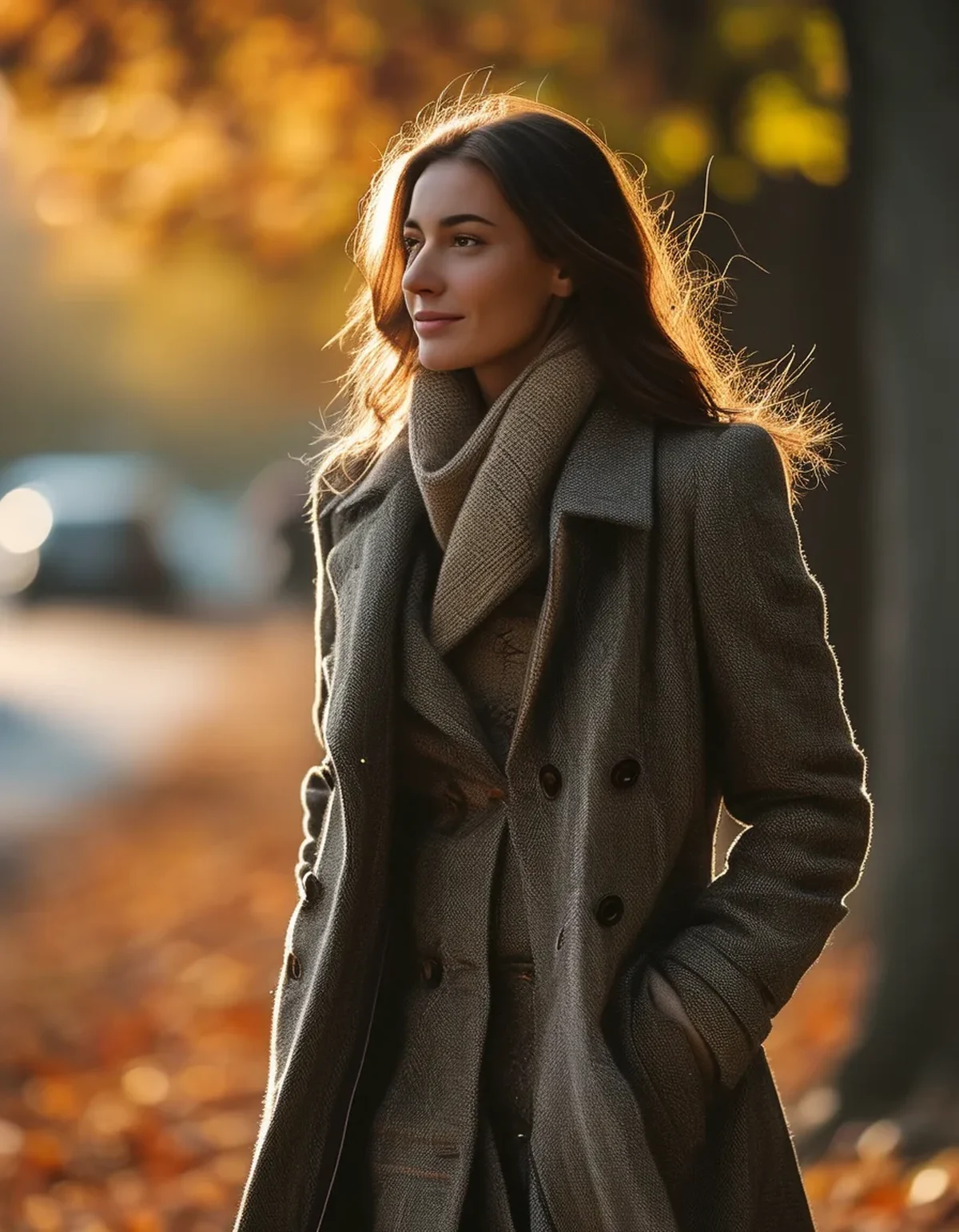
1. The errand day. Fitted long-sleeve base, oversized zip-through fleece or knit, light windbreaker. Straight-leg trousers or joggers with structure, clean sneakers. The fleece is the piece doing the work here - it looks intentional alone and packs down when it doesn’t.
2. The casual-office day. Fine merino base, a knit or a quarter-zip in a neutral, an unlined trench. Straight trousers, loafers with a visible sock. The trench is the right outer layer for this specific temperature range - it blocks wind, adds no real warmth, and looks correct across the whole day.
3. The active day. Long-sleeve technical base, a light packable insulated layer, a windproof shell. Leggings or joggers, trainers. This is where the packable outer layer earns its place - you’ll be taking it off within ten minutes of starting to move and wanting it back the second you stop.
4. The school-run-into-everything-else day. Bodysuit or fitted base, an oversized shirt or shacket, a long coat if the morning is genuinely cold. Jeans or wide-leg trousers, ankle boots. The shacket is the most useful transitional garment there is - it functions as both mid-layer and light outer layer depending on what’s under it.
The common thread across all four: the base is fitted and long-sleeved, the mid-layer stands alone, and the outer layer travels easily. Change the fabrics and the formality; the structure stays identical.
What about the parts nobody plans for?
Three situations that break an otherwise well-planned layering system.
Indoor heating. Buildings turn the heating on before the weather genuinely requires it, so the coldest morning of the week is often followed by an overheated office. This is an argument for the base layer being genuinely comfortable alone, and for not choosing a mid-layer you can’t remove without disrupting the outfit.
The wind. A 55°F day with wind feels considerably colder than a still one, and wind is the variable people check least. A windproof outer layer at 55°F is more useful than an insulated one at the same temperature - blocking wind does more for perceived warmth than adding loft.
Getting caught out in rain. Autumn rain is frequent and usually brief. A water-resistant outer layer costs you nothing on a dry day and saves the whole outfit on a wet one - and it’s the single spec most worth prioritising when choosing a transitional jacket.
And the swing that’s actually bigger than 15 degrees: early morning outdoors, a heated indoor space, a windy walk, and a warm afternoon can mean the effective range you experience is closer to 30 degrees. Which is the real argument for three thin layers - you’re not dressing for two temperatures, you’re dressing for five or six.
The one-sentence version: build outfits where every layer works alone, in tones that work in every combination, with an outer layer you’re happy to carry. Everything else in transitional dressing is detail.
FAQ: Transitional Layering, Answered
How many layers do I actually need?
Three thin ones beat two thick ones for a swing of 15 degrees or more. The point is adjustment points, not total warmth.
What’s the single best fabric for transitional weather?
Merino wool for base and mid layers - it regulates across a wider temperature range than cotton and handles moisture when you warm up and cool down repeatedly.
Do I need a proper coat yet?
Usually not at a 48-63°F range. A windproof or water-resistant light jacket handles it better, and a heavy coat becomes something you carry by mid-morning.
How do I stop looking bulky in three layers?
Keep the base and mid fitted, put the volume only in the outer layer, and stay tonal. Bulk usually comes from two loose layers stacked, not from the number of layers.
TL;DR:
- Three thin layers beat two thick ones - more adjustment points, less to carry
- The mid-layer decides the outfit, because it’s what you’ll wear most of the day
- Merino over cotton; cotton holds sweat and turns cold the moment you stop moving
- Keep all three layers tonal so every combination works
- A windproof, water-resistant outer layer beats an insulated one at these temperatures
You’re not dressing for two temperatures. You’re dressing for about six.
See It in Motion
Seen here: High Waist Jogger Sweatpants with Pockets — shop it on bubblelime.com
Keep Reading
This article is for general informational purposes only and is not medical advice. It is not a substitute for professional diagnosis or treatment. Always consult a qualified healthcare provider about your individual situation, especially before making significant changes to your diet or exercise routine.