Why Mismatched Fabric Textures Ruin an Otherwise Great Athleisure Outfit
Quick Answer: Pair fabrics with similar sheen and weight levels — a matte, structured legging with a matte, structured jacket, or a glossy, fluid legging with a similarly fluid top — since mismatched sheen (one very matte, one very glossy) is the most common reason a coordinated-color outfit still looks visually off.
An outfit can have perfectly matched colors and still look wrong in photos or in the mirror, and fabric texture mismatch is usually the invisible reason why.
Why does texture matter as much as color in athleisure?
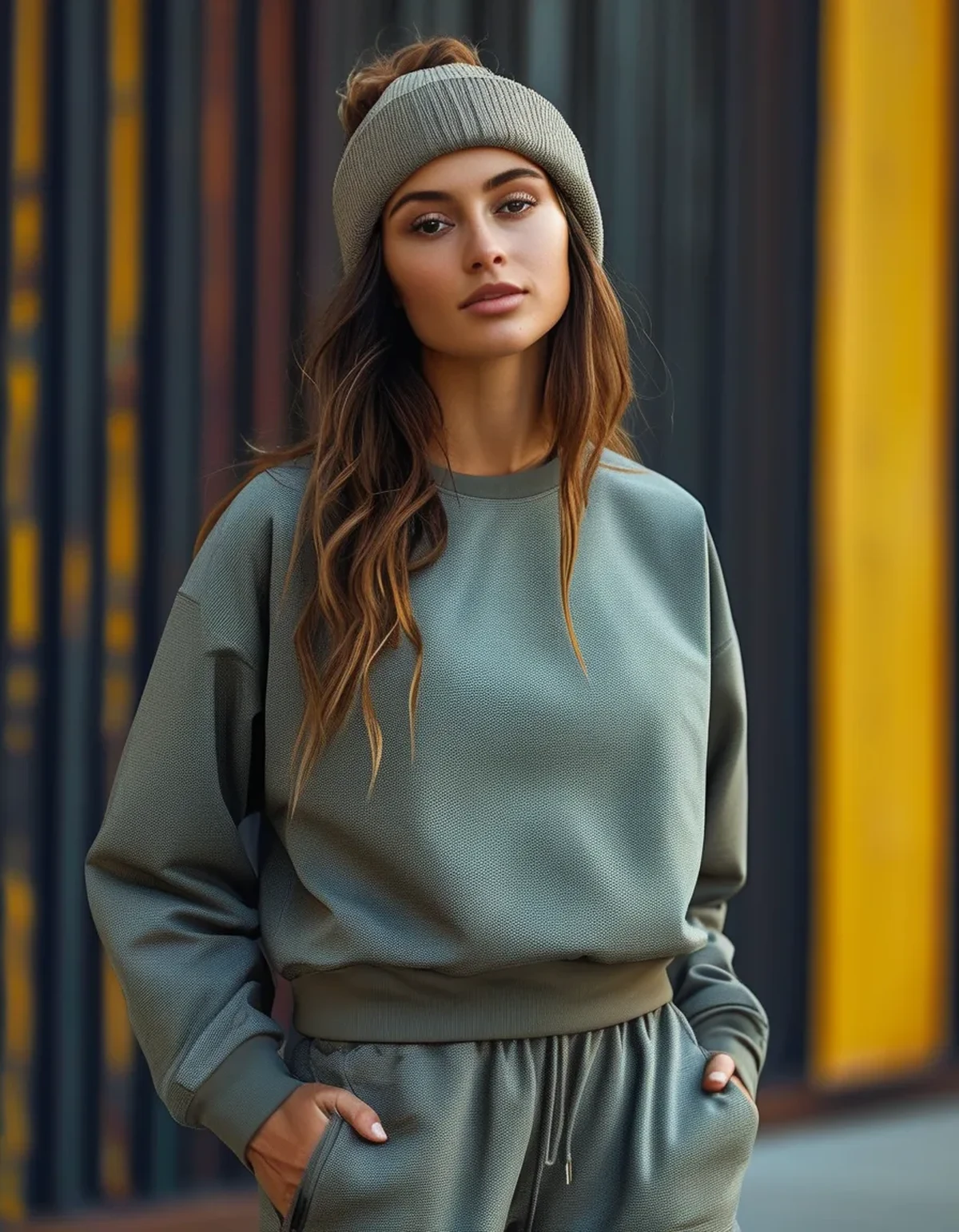
Color coordination is the first thing most people check, but fabric sheen and weight create a visual language of their own — a matte, heavyweight legging paired with a glossy, lightweight top can look mismatched even in identical or complementary colors, because the eye reads the difference in light reflection and drape as a lack of cohesion. This is why a monochrome outfit in different fabric finishes can look less put-together than a two-color outfit in matching finishes.
What’s the simplest rule for pairing textures?
Match sheen level: matte with matte, glossy with glossy, or intentionally contrast just one piece as a deliberate accent rather than mixing sheens across multiple pieces at once. A matte legging with a matte jacket and one glossy accessory (a bag, shoes) reads as an intentional styling choice, while a matte legging, glossy top, and matte jacket all at once reads as uncoordinated, even if the colors all technically match.

How does fabric weight affect the overall silhouette?
Pairing a heavyweight, structured fabric (like a ponte legging) with an equally structured top creates a cohesive, polished silhouette, while pairing it with a very lightweight, flowy fabric can create an unbalanced proportion where one half of the outfit looks substantial and the other looks flimsy by comparison. Matching weight isn’t as strict a rule as matching sheen, but it’s the second most common invisible mismatch worth checking.
When does intentional texture mixing actually work?
Mixing textures works when it’s clearly a deliberate accent, not an accidental clash — a single glossy or textured piece (a shiny bomber jacket, a ribbed accessory) against an otherwise uniform matte outfit reads as a styling choice specifically because the contrast is isolated to one element rather than spread across the whole outfit. The key differentiator between ‘intentional contrast’ and ‘mismatched’ is usually how many different textures are competing at once — one contrast point works, three or more usually doesn’t.
FAQ: Athleisure Texture Pairing Questions, Answered
Can I mix matte and glossy in the same athleisure outfit?
Yes, as a single deliberate accent (one glossy piece against a matte outfit), but avoid spreading multiple different sheens across three or more pieces at once.
Does texture matter more than color for a cohesive look?
They work together, but texture mismatch is more commonly overlooked since most people check color coordination automatically and skip checking sheen and weight.
How can I tell if my outfit has a texture mismatch before leaving the house?
A quick mirror check in natural light — if one piece visibly catches more light or shine than the others, that’s the mismatch. Photos under indoor lighting can also reveal sheen differences that aren’t as obvious in person.
TL;DR:
- Match fabric sheen (matte with matte, glossy with glossy) as the primary rule
- Fabric weight mismatch is the second most common invisible clash
- Intentional texture contrast works as a single accent piece, not spread across the outfit
- Check natural light for sheen differences before leaving — it’s often more visible in photos than in person
See It in Motion
Seen here: High Waist Yoga Leggings with Inner Pocket — shop it on bubblelime.com
Keep Reading
This article is for general informational purposes only and is not medical advice. It is not a substitute for professional diagnosis or treatment. Always consult a qualified healthcare provider about your individual situation, especially before making significant changes to your diet or exercise routine.