The Athleisure Color Rule That Makes Everything Match
Quick Answer: The rule: build your athleisure wardrobe around one neutral base (black, grey, or navy) plus one or two accent colors used consistently across pieces, rather than buying each item in whatever color caught your eye. This alone eliminates most mismatch problems.
Your closet has great individual pieces — a mustard set, a burgundy jacket, a teal legging — that somehow never combine into a full outfit without a fight. That’s not bad taste. It’s a color-system problem, and it has a genuinely simple fix.
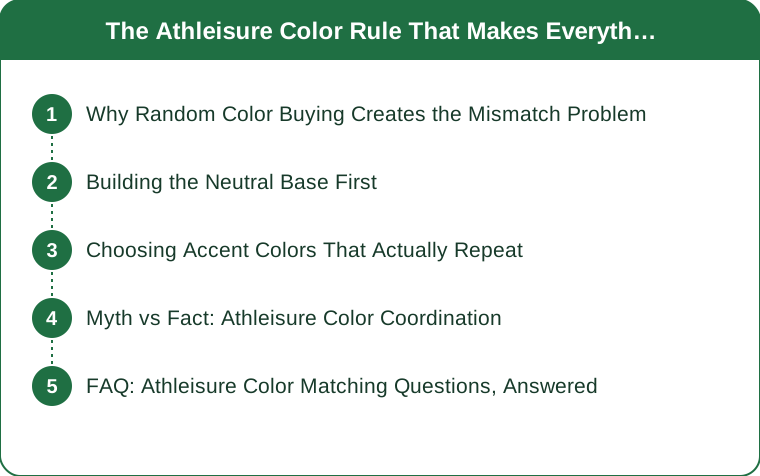
Why Random Color Buying Creates the Mismatch Problem
Buying athleisure piece by piece, based on what looks good individually in the store or online, naturally produces a closet full of items that were never designed to coordinate with each other. Each piece is a great standalone choice and a poor systemic one.
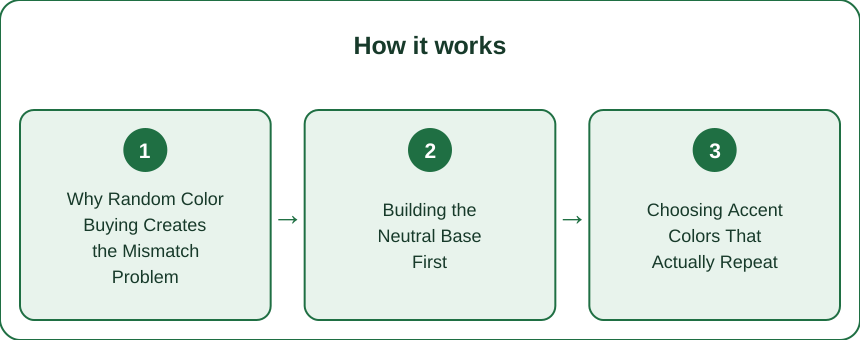
The fix isn’t buying less — it’s buying with a consistent color logic going forward: pick one neutral (black, heather grey, or navy) as your base color for roughly 70% of pieces, then one or two accent colors that repeat across tops, bottoms, and outerwear rather than a new accent color every purchase.
Building the Neutral Base First
Start with the pieces you wear most — leggings, a sports bra, a basic pullover — in your chosen neutral. This becomes the reliable foundation that any accent piece can be paired against without a second thought, which is what actually solves the ‘nothing matches’ feeling day to day. Aim for this neutral to cover roughly 6-8 core pieces before adding accent colors, so the foundation actually feels complete rather than sparse.

Choosing Accent Colors That Actually Repeat
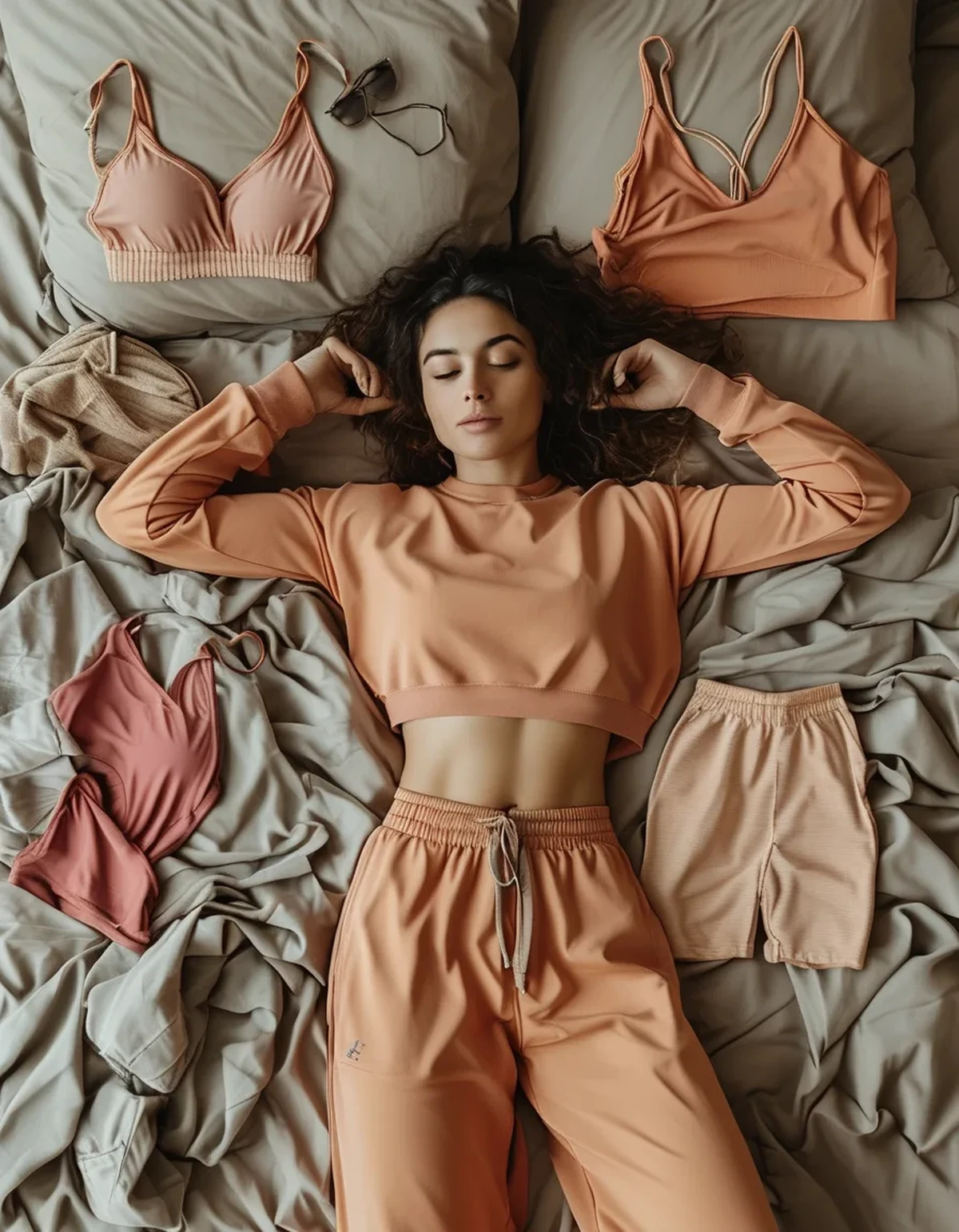
Rather than one random accent color per item, pick two accent colors total (for example, a warm terracotta and a soft sage) and look for them specifically across future purchases — a terracotta jacket, terracotta socks, a sage headband. Repetition across categories, not variety, is what creates a cohesive-feeling wardrobe. Keeping a saved reference photo of your two accent shades on your phone makes it much easier to check a match while shopping in-store or online, instead of guessing from memory.
Myth vs Fact: Athleisure Color Coordination
Myth: A colorful wardrobe can’t also be coordinated. Fact: The two aren’t in conflict — the coordination comes from repeating a limited set of colors across pieces, not from avoiding color altogether.
Myth: Matching exactly is the goal. Fact: Complementary, not identical, is what looks intentional — a sage top with a terracotta accent reads more stylish than head-to-toe identical sage.
Myth: Building a coordinated wardrobe means starting over. Fact: Most closets already have a usable neutral base — the fix is being selective about future purchases, not replacing everything at once.
FAQ: Athleisure Color Matching Questions, Answered
How many accent colors should I actually have in rotation?
Two is the sweet spot for most people — enough to feel varied, few enough that everything still coordinates without much thought.
What if I already own a lot of one-off colors that don’t fit the system?
Keep them as standalone pieces worn with all-neutral outfits rather than trying to force them into combinations — they still have a place, just a more limited one.
Does this rule work for both bold and muted color palettes?
Yes — the repetition principle works regardless of whether your chosen accents are bold (cobalt, coral) or muted (sage, terracotta), since the system is about consistency, not a specific palette.
TL;DR:
- Build around one neutral base color for roughly 70% of pieces
- Pick two accent colors and look for them across future purchases, not one new color each time
- Repetition across categories creates coordination, not identical matching
- Existing one-off pieces can still work as standalones with neutral outfits
The mismatch problem isn’t a taste problem — it’s a systems problem, and one consistent color rule going forward fixes most of it.
See It in Motion
Seen here: High Waist Yoga Leggings with Side Pockets — shop it on bubblelime.com
Keep Reading
This article is for general informational purposes only and is not medical advice. It is not a substitute for professional diagnosis or treatment. Always consult a qualified healthcare provider about your individual situation, especially before making significant changes to your diet or exercise routine.